


How Global Partnerships in Hybrid Seed Industry Are Transforming Indian Agriculture (2026 Guide)

Updated: Apr 15
The global partnerships in hybrid seed industry are no longer just collaborations—they have become the backbone of modern agriculture.
In 2026, the hybrid seed sector is not limited to individual countries or local companies. Instead, it operates as a globally connected ecosystem, where research, technology, and innovation flow seamlessly across borders.
For India, this shift is highly significant. With increasing population pressure, climate uncertainty, and rising food demand, global partnerships are helping farmers produce more with fewer risks.
You Can Read : How Climate Change Is Impacting Vegetable Seeds Production
Understanding the Shift: From Local to Global Seed Ecosystem

A decade ago, seed development was mostly regional. Companies relied on local research and limited genetic resources.
Today, things have changed drastically.
Through international collaborations:
Scientists share global genetic material (germplasm)
Companies co-develop advanced hybrid varieties
Governments support cross-border agricultural programs
This means Indian farmers now benefit from global-level innovation at the local level
1. Accelerated R&D: From 10 Years to Faster Innovation
Creating a high-quality hybrid seed is a long and complex process. Traditionally, it took 7–10 years to develop a single hybrid.
Global partnerships are speeding this up significantly.
How?
Access to Global Genetic Diversity
Organizations like CGIAR maintain massive genetic libraries of crops from around the world.
These include traits like:
Drought tolerance
Pest resistance
Heat adaptability
Indian companies can now use these traits without starting from scratch.
AI & Data-Driven Breeding
Advanced technologies like:
Artificial Intelligence
Genomic selection
Climate simulation models
allow scientists to predict how a crop will perform in different regions.
Example: A hybrid tested in Africa can help predict performance in Indian heat conditions.
Impact
Faster hybrid development
Reduced cost of innovation
Quicker availability of improved seeds
Result: Up to 30% reduction in development time
2. Technology Transfer: Not Just Seeds, But Complete Solutions
One of the biggest advantages of global partnerships in hybrid seed industry is the transfer of advanced agricultural technologies.
These partnerships bring end-to-end improvements, not just seeds.
Seed Enhancement Technologies
Modern hybrids come with protective layers:
Seed Coating: Protects from soil diseases
Pelleting: Improves seed handling and uniform sowing
This ensures:
Better germination
Strong early plant growth
Uniform crop stands
Digital Traceability & Blockchain
Fake seeds are a major problem in India.
Global partnerships are solving this through:
QR code verification
Blockchain-based tracking systems
Farmers can now:
Verify seed origin
Ensure authenticity
Avoid counterfeit products
You Can Read Also : Profitable Summer Vegetable Farming in India: A Practical Guide to Smart Crop Selection & Higher Income
3. Climate-Resilient Hybrids: A Necessity, Not an Option
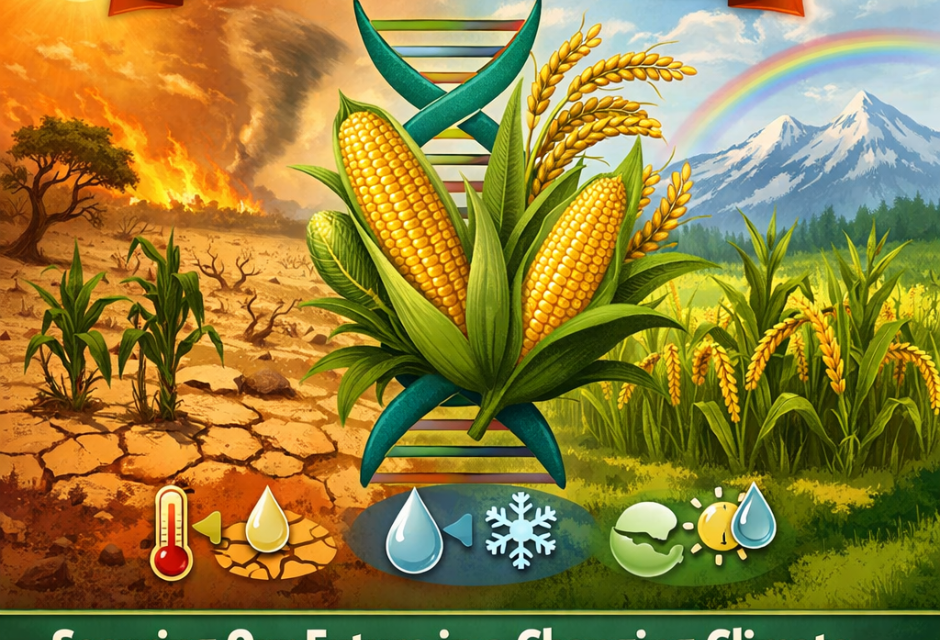
Climate change is already affecting Indian agriculture:
Unpredictable rainfall
Heatwaves
New pest outbreaks
Global collaborations focus on creating “climate-smart hybrids.”
What Makes These Hybrids Different?
Stable performance under stress
Resistance to multiple diseases
Ability to adapt across regions
Multi-Location Testing
Before release, hybrids are tested in:
15–20+ global environments
Different soil types
Extreme weather conditions
By the time seeds reach Indian farmers, they are already stress-tested globally
4. Empowering Small Farmers Through Global Partnerships
A common misconception is that advanced seeds only benefit large farmers.
In reality, global partnerships are helping small and marginal farmers the most.
Role of Public-Private Partnerships (PPPs)
Governments collaborate with global companies to:
Provide subsidized hybrid seeds
Improve rural distribution systems
Offer training and awareness
Real Impact
Studies and field data show:
20% yield increase in paddy
Up to 50% increase in pulses (like Arhar)
This directly improves farmer income and reduces risk
You Can Read Also : Hybrid Seeds for Summer Stress Conditions in India
How to Maximize Benefits from Global Partnerships
Farmers and agribusinesses can take full advantage by following smart strategies:
1. Diversify Seed Selection
Use multiple hybrid varieties to reduce risk.
2. Adopt Precision Farming Tools
Use apps and AI tools to monitor:
Soil health
Crop growth
Weather patterns
3. Verify Seed Authenticity
Always check:
QR codes
Certification labels
4. Stay Updated
New hybrid varieties are released regularly—stay informed.
Case Study: APSA – World Vegetable Center Consortium (2025–2026)
This real-world example clearly shows how global partnerships in hybrid seed industry create measurable impact.
The Problem: Massive Crop Loss in India
In 2024, farmers in:
Odisha
Andhra Pradesh
faced severe challenges:
Begomovirus infection (whitefly spread)
Extreme heat stress
Up to 80% crop failure
Traditional seeds couldn’t survive these conditions.
The Three-Level Global Solution
1. Global Research (Foundation)
WorldVeg developed resistant breeding lines with:
Virus resistance
Fungal protection
2. Partnership Network (Bridge)
Through APSA:
Indian companies got early access to these lines
Collaboration ensured faster deployment
3. Local Adaptation (Execution)
Indian companies customized hybrids for:
Local taste preferences
Market demand
Regional climate
Results in 2026
37 new hybrid varieties released
“Krishna” chili developed for Odisha
800,000+ farmers benefited
25–40% higher marketable yield
This is the perfect example of: Global Innovation + Local Expertise = Agricultural Success
Why This Matters for the Future of Indian Agriculture
Global partnerships are not just a trend—they are the future.
They ensure:
Faster innovation cycles
Reduced agricultural risk
Climate-ready farming
Increased farmer profitability
Conclusion
The global partnerships in hybrid seed industry are transforming Indian agriculture into a more resilient, productive, and technology-driven system.
By combining global research, advanced technology, and local expertise, these collaborations are ensuring that even small farmers can access world-class agricultural solutions.
The future of farming is not local or global—it is collaborative.
FAQs
1. What are hybrid seeds?
Hybrid seeds are produced by crossing two parent plants to achieve better yield, disease resistance, and uniform growth.
2. Why are global partnerships important in agriculture?
They bring advanced research, better technology, and improved seed quality to farmers.
3. Can small farmers afford hybrid seeds?
Yes, through subsidies and government programs, they are becoming more accessible.
4. How to identify genuine hybrid seeds?
Check certified sellers, QR codes, and traceability systems.
5. Are these seeds climate-resistant?
Yes, modern hybrids are specifically designed to handle extreme weather conditions.


Comments